.svg "Logo (1)")
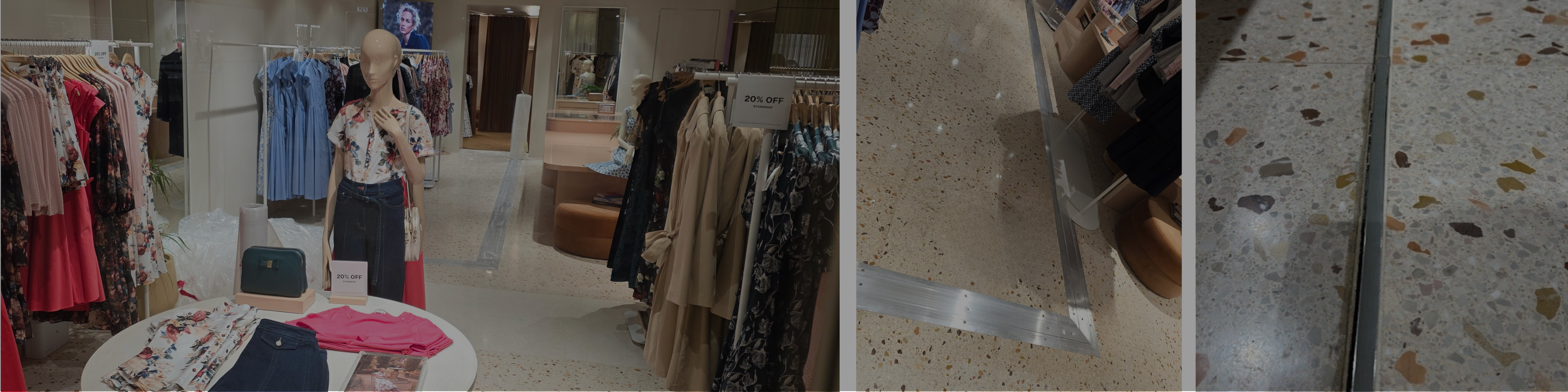
Darren Gatt, a Melbourne based flooring specialist explains why selecting the right retrofit expansion joint system, and the right technical partner, helped resolve a failed retail tenancy installation where the original specification wasn’t fit for purpose.
What you need to know
-
Using an inappropriate flooring trim can lead to lifting, cracked tiles and safety hazards.
-
Retrofitting an expansion joint system can resolve these issues without replacing the entire floor.
-
Technical support, custom manufacturing and product availability can be critical when remedial work needs to happen quickly.
-
Specifying and installing the correct expansion joint in the first instance saves expensive rework
When the Wrong Expansion Joint Solution Becomes a Safety Risk
Expansion joints are rarely noticed when they’re performing correctly. However, when they’re specified or installed incorrectly, they can quickly become a costly problem.
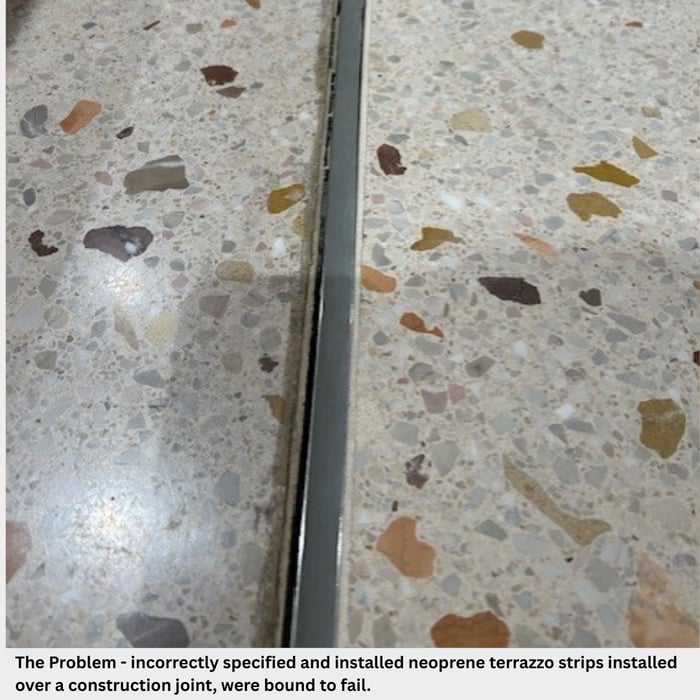
For one newly completed retail tenancy in Canberra, the flooring began to fail within a few months as the incorrect trim was installed over a structural slab joint. When the joint lifted, surrounding tiles cracked, and the floor became a potential trip hazard.
According to Darren, the issue was not the result of poor installation, but rather the specification of an expansion joint that was unsuitable for the application. To resolve the problem, the retailer engaged National Flooring Solutions (NFS) to identify and implement an appropriate retrofit solution.
Why Do Expansion Joints Fail?
Structural slab joints are designed to accommodate movement between concrete slabs.
According to Darren, this project used what was described as a standard neoprene tile trim over a structural slab joint where the two concrete slabs were moving independently. That profile was not designed to accommodate anywhere near the level of movement occurring beneath the finished floor. Within months, the joint began lifting, floor tiles started cracking, and the floor presented an increasing safety hazard.
Finding the Right Retrofit Solution
Rather than replacing the entire floor, NFS investigated retrofit expansion joint systems that could be installed into the existing finished floor.
After discussing the project with Latham’s technical engineering team, several options were reviewed before a preferred solution was selected.
Because the slab joint incorporated an L-shaped layout with a 45-degree return, a standard off-the-shelf product wasn’t suitable.
The expansion joint cover was custom manufactured to suit the geometry of the existing slab joint. According to NFS, the ability to customise the design and fabrication of the product was one of the key reasons Latham was selected.
“They had a retrofit expansion joint cover system that suited the amount of movement the floor was getting, and they could also custom make it. This one wasn’t in a straight line. It was an L-shape with a 45-degree return. Latham actually custom fabricated and permanently welded the corner, which no one else really does.”
-1.png?width=700&height=662&name=Latham%20Digital%20Postcards%20(28)-1.png)
Delivering the Repair Without Closing the Store
The remediation work was completed after hours inside an occupied retail tenancy.
To minimise disruption, the team installed a full dust-control encapsulation system before carefully saw-cutting approximately a 150 mm-wide section of the terrazzo floor directly above the slab joint.
The area was cleaned and prepared before the new retrofit expansion joint system was installed into position and mechanically fixed to the existing floor.
Following installation, the work area was cleaned and returned ready for trade.

Why Local Manufacturing Makes a Difference
NFS works throughout Australia and parts of New Zealand on projects ranging from retail maintenance through to luxury flagship store fitouts.
For projects involving unusual geometries or urgent remediation work, local manufacturing provides practical advantages. The ability to customise products, maintain inventory and respond quickly to reactive work makes a significant difference.
“A lot of the jobs I have are reactive problems. Availability is a big one.”
The business also believes the market has shifted noticeably in recent years.
“There’s definitely been a shift towards better quality products. Australian made first, if available.”
An Experienced Problem-Solving Partner
NFS has more than 25 years of flooring industry experience and provides flooring installation, remediation and specialist floor-covering services throughout Australia and New Zealand.
While the company works across a broad range of flooring systems, expansion joints and construction joint covers are among the applications where Latham is regularly its preferred supplier.
“When I get a project that’s a little bit left field, Lathams are pretty much my go-to.” 
Frequently Asked Questions
-
Why can’t a standard tile trim be used over a structural slab joint?
As this project demonstrated, tile trims are not designed to accommodate structural movement. Selecting the wrong profile can result in lifting, cracked finishes and ongoing maintenance issues.
-
Can expansion joints be retrofitted?
According to NFS, retrofit expansion joint systems can provide an effective solution where an existing floor requires remediation without complete replacement.
-
Why is technical support important when specifying expansion joints?
Projects involving unusual movement, custom geometries or remedial work often require product selection advice. NFS says access to the knowledgeable technical support of Lathams internal engineering team helped identify an appropriate solution for this project.
Key Takeaways
-
Correct product selection is essential where structural movement is present.
-
Retrofit expansion joint systems can provide an effective remediation solution.
-
Custom manufacturing may be required for non-standard joint layouts.
-
Technical advice and responsive after-sales support help reduce project risk.
-
Local manufacturing and product availability can be valuable when projects require fast turnaround.
Need Technical Guidance?
If you’re specifying expansion joint systems for a new project or investigating options for an existing floor, Latham’s technical team of qualified engineers and product experts can help assess your application and recommend solutions suited to your project’s movement, detailing and installation requirements.
Latham Australia
Latham has been manufacturing premium quality flooring products in Sydney, Australia for more than 70 years. End-to-end control and oversight of procurement, manufacturing, and quality control results in the industry’s most reliable and high-performing products.
The name Latham is synonymous with quality and Latham have been the recipient of over 30 awards including numerous Australian Design Awards. Latham products can be found in prestigious buildings around the world including the Sydney Opera House, The Australian War Memorial in London, Singapore’s Changi Airport Terminals and the Petronas Twin Towers in Kuala Lumpur.
To find out more about Latham products, visit latham-australia.com. To talk to a Latham product expert, call 1300 LATHAM (528 426) or email info@latham-australia.com


.svg "Logo (2)")