.svg "Logo (1)")
Australia's built environment has entered a new phase. For the designers, architects and contractors working on premium commercial projects, a 6 Star Green Star rating is no longer a stretch goal. It is increasingly the expectation. Understanding what that means for product specification is something every building professional should be across.
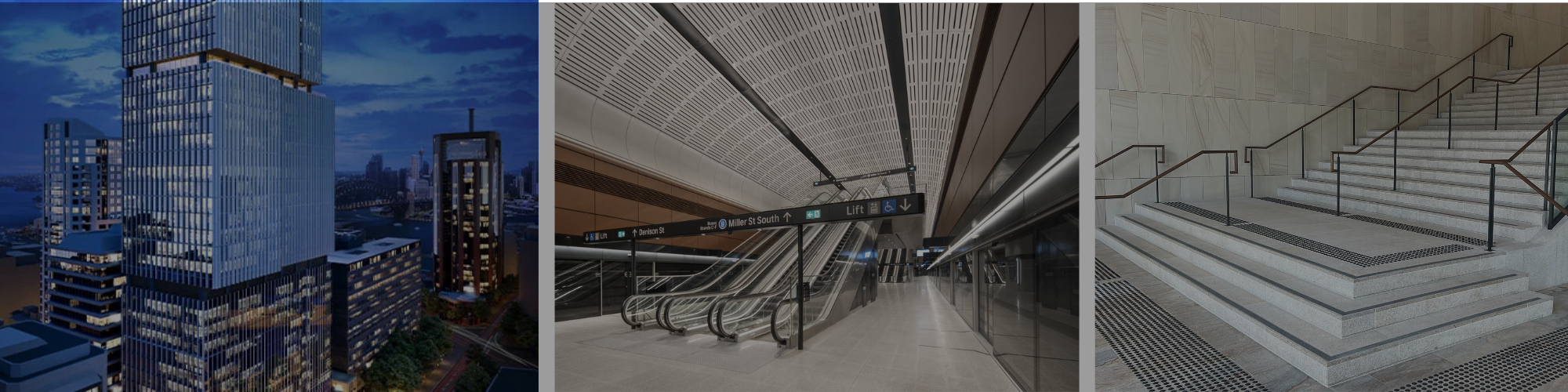
We are proud to have supplied our world-renowned Neoprene-X-Pansion Loc Strips and Slip Resistant Safety Stair Tread Nosings to Victoria Cross Tower in North Sydney, a landmark $1.2 billion development designed by Bates Smart and delivered by Lendlease. The building achieved a 6 Star Green Star Design rating and the Platinum WELL certification for both shell and core, which represents the highest wellness accreditation available anywhere in the world.
It is a remarkable outcome for everyone involved. It also provides us a useful moment to reflect on what these certifications actually require, and where Australian Made products fit into that picture.
.png?width=642&height=642&name=Latham%20Digital%20Postcards%20(18).png)
What is Driving the Push Toward 6 Star Green Star?
The Green Building Council of Australia launched the Green Star rating system in 2003. A 6 Star rating, defined as World Leadership in sustainable design, was for many years a genuinely rare achievement. That is changing. The drivers are well understood by most practitioners, but they are worth restating. Green Star ratings assess performance across eight categories:
- Emissions
- Energy
- Indoor environment quality
- Land use and ecology
- Management
- Materials
- Transport
- Water
Major corporate and government agencies now treat Green Star performance as part of their own sustainability reporting. Tenants are asking for it. A building that cannot demonstrate its green credentials is harder to lease. Investors are pricing sustainability performance into asset valuations. Green-certified buildings are consistently showing stronger capital values, lower vacancy rates and more favourable financing terms. And regulation is heading in one direction: what might be voluntary today is fast becoming required compliance over the life of a building.
For architects and designers, this means the sustainability conversation is no longer something that starts when the client asks for it. It is built into the design intent from day one.
Victoria Cross Tower at a Glance:
- The 6 Star Green Star Design rating (Green Building Council of Australia)
- Platinum WELL Shell and Core certification
- Net-zero carbon construction, Scope 1 and 2
- 100% renewable electricity, fully electric building
- 5.5 Star NABERS Energy target
- 42 storeys, 58,000sqm, capacity for 7,000 workers
- Direct connection to Sydney Metro Victoria Cross Station
- Designed by Bates Smart and delivered by Lendlease
Every Specification Decision is Involved
Achieving 6 Star Green Star is not the result of a few headline decisions about energy systems. Performance at or near best practice is needed across each aspect of the rating. That means the specification decisions made at every level of the building contribute to the final outcome.
Product selection is a materials decision and these decisions carry real weight under the current Green Star framework. Assessors look at product durability, embodied carbon, local sourcing, supply chain transparency and whole-of-life performance. When you specify products that are locally manufactured, proven over decades and designed to last without replacement, those factors register.
This is where we come in. Latham have been manufacturing in Sydney, since the early 1950s. Our products do not travel from overseas and raw material supply is strictly controlled in-house. Products are designed, engineered, fabricated and dispatched from our factory in Gladesville. That is a verifiable local supply chain, and it matters in a Green Star materials assessment.
Products Supplied to Victoria Cross Tower
- Neoprene-X-Pansion Loc Strips: Founding Managing Director and Mechanical Engineer David Latham designed and patented this system for controlling thermal movement across solid floor surfaces such as terrazzo, pavers and polished concrete. Lathams' Neoprene-X-Pansion Loc Strips are designed to accommodate expansion and contraction while maintaining structural integrity and a clean, aesthetic surface finish for the long term.
- FA491S Stair Nosings: Slip-resistant safety nosings installed on all the tower's stairways. Compliant with Australian standards, for both slip resistance and visual / luminance contrast, abrasive inserts provide dependable traction, even under wet or high-use conditions. Specifically designed to provide long-lasting performance in high-traffic environments, they deliver a refined architectural finish appropriate for a building of this calibre.
.png?width=642&height=642&name=Latham%20Digital%20Postcards%20(17).png)
Australian Made is a Sustainability Argument
The sustainability conversation in architecture has matured considerably. Where the focus was once almost entirely on operational energy, embodied carbon is now getting the attention it deserves. Embodied carbon refers to the emissions associated with the manufacture, transport and installation of building materials. When you choose locally manufactured products, you reduce the carbon footprint of that supply chain in a way that imported alternatives cannot match.
There is also the question of longevity. The most sustainable product is one that never needs replacing. A building that specifies quality products with a proven service life generates no replacement manufacturing carbon, no installation waste, no disposal of replaced material and no service disruption across that extended lifespan. When you consider a 50 or 100 year asset life, the compounding environmental benefit of choosing the right product the first time becomes significant.
%20(2)-1.png?width=700&height=113&name=1920%20x%201271%20Blog%20Banners%20-%20all%20clients%20(1271%20x%20720%20px)%20(2)-1.png)
Latham has documented and easily visited examples of its stair nosings remaining in active service for over 50 years. That is not a "marketing claim". It is the result of material selection, manufacturing precision and product design that has consistently prioritised performance and engineering quality. For a designer or architect preparing a specification for a project with a 6 Star Green Star target, that track record is directly relevant.
A nosing that lasts 50 years on a stair in a high-traffic building means no replacement cycle, no maintenance disruption, no landfill impact and no repeat manufacturing carbon. Multiply that across a 42-storey tower and the aggregate benefit across the building's life is enormous.
What Architects and Designers are Looking For
The architects and interior designers working on 6 Star Green Star projects are navigating a detailed brief. Products need to be safe and compliant, perform reliably over decades, sit well within the design intent and hold up to scrutiny in a materials assessment.
-2-1.png?width=1080&height=719&name=Latham%20Digital%20Postcards%20(9)-2-1.png)
Locally manufactured products with a long track record in Australian commercial projects offer advantages that imported alternatives generally cannot. Technical support is accessible. Lead times are reliable. The performance history is verifiable in Australian conditions, including climate, loading standards and building code requirements. Supply chain documentation for a Green Star submission is straightforward because the supply chain is local.
The shift we observe in the market is that sustainability thinking is becoming part of the design instinct rather than something addressed toward the end of the project. The best practice we see from design teams today involves asking sustainability questions at the point of specification, not after. That includes asking how long a product will last, where it was made and what happens when it eventually needs to be removed or replaced.
The Direction of Travel
The Green Building Council's updated Green Star Buildings tool, alongside the Climate Positive Pathway requirements, signals that expectations will continue to rise. Buildings targeting certification in coming years will face stricter embodied carbon benchmarks and stronger requirements around local material sourcing and supply chain transparency.
For the Australian construction industry this represents an opportunity. A domestic manufacturing sector that can supply proven, long-lasting, locally made products into premium green-rated projects is well placed for where the industry is heading.
Latham has been part of that story for over 70 years. From the Sydney Opera House to the Petronas Twin Towers in Kuala Lumpur and from the National Library of Australia to Victoria Cross Tower, the buildings that carry Latham products demonstrate what quality and longevity look like at scale.
The next time a project brief calls for 6 Star Green Star performance, we would encourage every designer, architect and head contractor to ask not just whether a product meets the minimum standard, but whether it will still be performing without replacement or intervention across the years. That is the sustainability question that matters most.
To find out more about Latham products and how they can support your next project, visit latham-australia.com or call us on 1300 LATHAM (528 426).


.svg "Logo (2)")