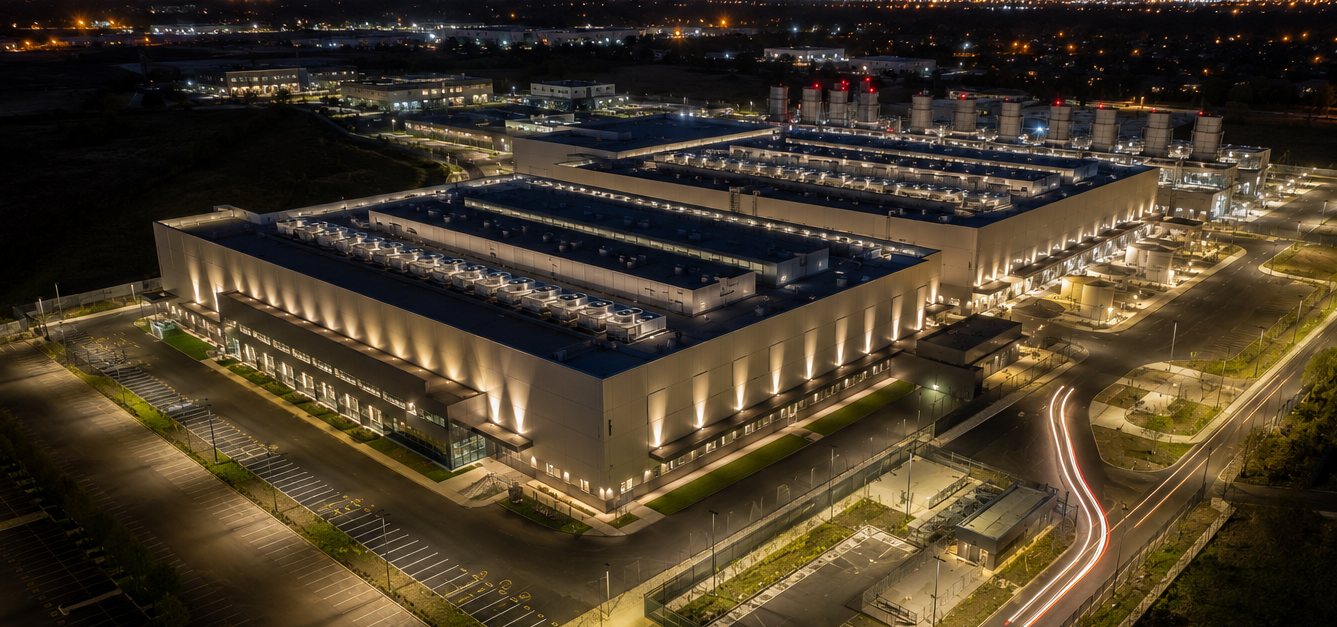
Driven by cloud computing, artificial intelligence, and Australia's strategic position as the leading data centre hub in Asia-Pacific, construction activity in this sector is accelerating at a rate the industry has never seen. Amazon has committed $20 billion to Australian data centre infrastructure through 2029. Microsoft has committed $5 billion. Blackstone's $24 billion acquisition of AirTrunk signals what institutional capital thinks of the long-term outlook. These are committed investments, not projections.
What You Need to Know
- Data centres impose structural, fire and operational demands that standard commercial specifications cannot meet
- The wrong expansion joint, fire barrier or floor system can cause millions of dollars of downtime or critical safety failure
- Architects, engineers, designers and head contractors each face specific specification challenges in this building type
- Local Australian manufacture, documented load ratings and NCC compliance documentation are non-negotiable
- Latham has supplied hyperscale data centres for Amazon AWS, NextDC, Meta and Vantage across Australia and internationally
A Data Centre is not a Commercial Building
Most commercial buildings are designed around human occupants. Data centres are not. Server racks, UPS systems and cooling infrastructure impose loads, movement patterns and protection demands that standard commercial specifications were not built to handle.
For architects and designers, this means specifying products that perform across decades of intensive use, not just at practical completion. For structural and fire engineers, it means understanding how expansion joints, fire barriers and seismic systems interact. For head contractors, it means procuring from manufacturers who can deliver custom solutions on programme without supply chain risk — and without NCC compliance being compromised by a product swap under programme pressure.
The Specific Challenges, and the Right Responses
|
THE CHALLENGE |
THE LATHAM RESPONSE |
|
|
|
|
|
|
|
|
|
|
|
|
|
|
Eight Products. One Application.
Each product below can be specified directly into architectural documentation, reviewed against NCC and BCA requirements by engineers, and procured by head contractors with documented load ratings and full technical support.
|
Floor & Structure Heavy Duty Expansion Joints
|
Floor & Structure No-Bump Series
|
|
Fire & Safety Fire & Smoke Barrier Systems
|
Water Management Water Gutter Profiles
|
|
Concrete Joints Neoprene Loc Strip System
|
Seismic Performance Seismic Rated Expansion Joints
|
|
Entry & Access Entry Mat Systems
|
Walls & Corridors Wall Protection Systems
|
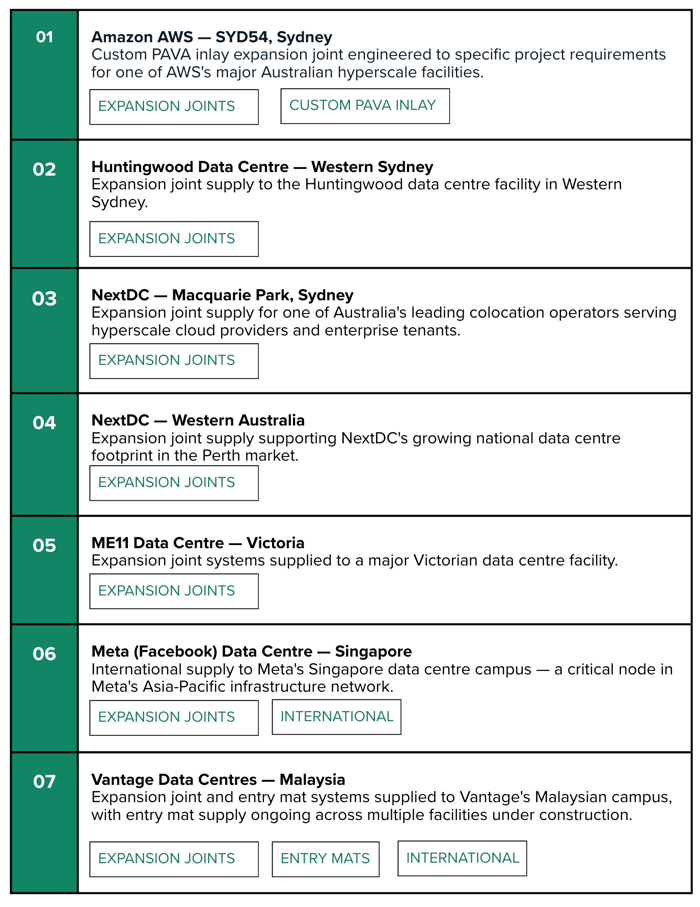
Projects Latham Have Already Delivered
A confirmed selection of data centre projects supplied across Australia and internationally — from hyperscale facilities requiring custom-engineered solutions to fast-tracked colocation projects where head contractor programme certainty was the priority.
 Australian Made is a Specification Advantage
For architects, engineers, designers and head contractors, the supply chain behind a specification matters as much as the product itself. Facilities housing billions of dollars of infrastructure cannot afford delays, substitutions or the uncertainty of offshore supply chains.
Latham has been manufacturing in Sydney since the early 1950s. Every product is designed, engineered, fabricated and dispatched from our factory in Gladesville, NSW — the product you specify is the product that arrives on site, without substitution. As a fourth-generation, family-owned and operated business, technical decisions are made locally by people who understand Australian building standards and the kind of project-by-project problem solving complex data centre builds require.

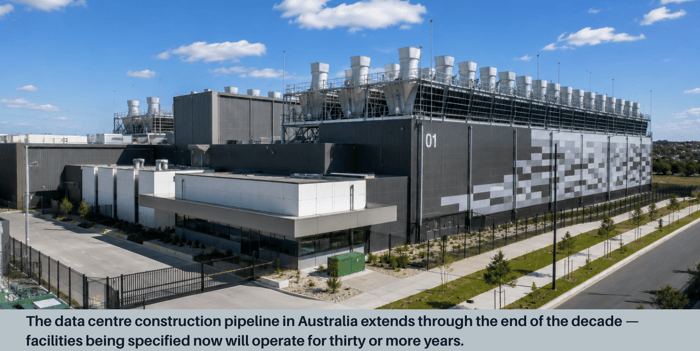
These Buildings Will Run for Thirty Years
Specification choices made in the next twelve to twenty-four months will either deliver products that perform across that full asset life, or create maintenance burdens, operational failures and costly remediation. The expansion joint that fails under wheeled load, the fire barrier that fails during a seismic event, the floor joint that creates a bump — these are not minor defects in a data centre. They are critical system failures.
Whether you are writing the spec, reviewing it, coordinating it, or building to it: Ask the question that matters most. Will this product still be performing without replacement or intervention across the full life of the facility? In a building where downtime is measured in millions of dollars per hour, that is the right question. It is the question Latham's products are built to answer. Contact our technical team early — we work best when we are part of the conversation from the design stage.
Frequently Asked Questions
- Why can't standard commercial expansion joints be used in a data centre?
Standard commercial joints are not engineered for the extreme point loads imposed by server racks and small-wheel equipment trolleys. Under this traffic, standard joint edges fail — creating surface damage, equipment risk and ongoing maintenance cost. -
What makes a No-Bump expansion joint different?
A No-Bump joint provides a completely flush service transition across the joint - no raised edge, no lip. This eliminates vibration risk for sensitive hardware being moved on hard wheels and removes a potential trip hazard in high-traffic corridors.
- Are Latham products compliant with NCC and BCA requirements?
Yes. Load rating documentation, fire test data and BCA compliance notes are available on request for all data centre products. NatSpec and proprietary specification clauses are also available for architect and engineer use. - Can Latham supply custom or non-standard solutions?
Yes, custom manufacturing is a core capability. The ability to engineer custom joint profiles, non-standard geometries and bespoke cover plates in-house is one of the key reasons Latham is regularly specified on complex projects.
- How does Latham support head contractors on fast-tracked programmes?
Local manufacturing in Gladesville means reliable lead times and no offshore supply chain risk. Latham works directly with head contractors on programme and procurement requirements, and can respond quickly to reactive or urgent work.
Key Takeaways
- Data centres require expansion joints, fire barriers and floor systems engineered specifically for their loads and operational demands
-
Standard commercial products specified without understanding these demands create costly failures
- Local manufacture, documented compliance and technical support are non-negotiable in this sector
- Latham has a confirmed track record across hyperscale, colocation and international data centre projects
- Specification support is available from early design through to on-site delivery for all project roles
Need Technical Guidance?
If you're specifying expansion joint systems, fire barriers, floor systems or wall protection for a data centre project, Latham's technical team can help assess your application and recommend solutions suited to your project's movement, loading, detailing and installation requirements. NatSpec clauses, load rating documentation, fire test data, BCA compliance notes and product samples are all available on request.
About Latham Australia
Latham Australia is a proudly Australian-owned and operated family business with more than 70 years of experience designing and manufacturing premium architectural stair, flooring and wall protection products. Based in Gladesville, NSW, Latham manufactures a comprehensive range of solutions including safety stair tread nosings, tactile indicators, expansion joint systems, entry mats, grates and wall protection products.
Renowned for innovation, quality and reliability, Latham pioneered the Neoprene-X-Pansion Loc Strip Control Joint System and has received numerous Australian design and industry awards throughout its history. Its products are specified in major commercial, healthcare, education, transport and public infrastructure projects across Australia and around the world.
As a local manufacturer, Latham maintains end-to-end control over design, production and quality assurance, providing architects, builders and project managers with trusted Australian-made solutions that deliver safety, durability and long-term performance.
To find out more about Latham products and how they can support your next project, visit latham-australia.com or call us on 1300 LATHAM (528 426).